Section · 4 entries
Early Cinema
How silent-era pictures learned to tell a story on screen, shown frame by frame in surviving copies whose version is recorded, and through the makers' own catalogs, original drawings and trade papers where no reliable copy survives.
 Illustration
Early Cinema
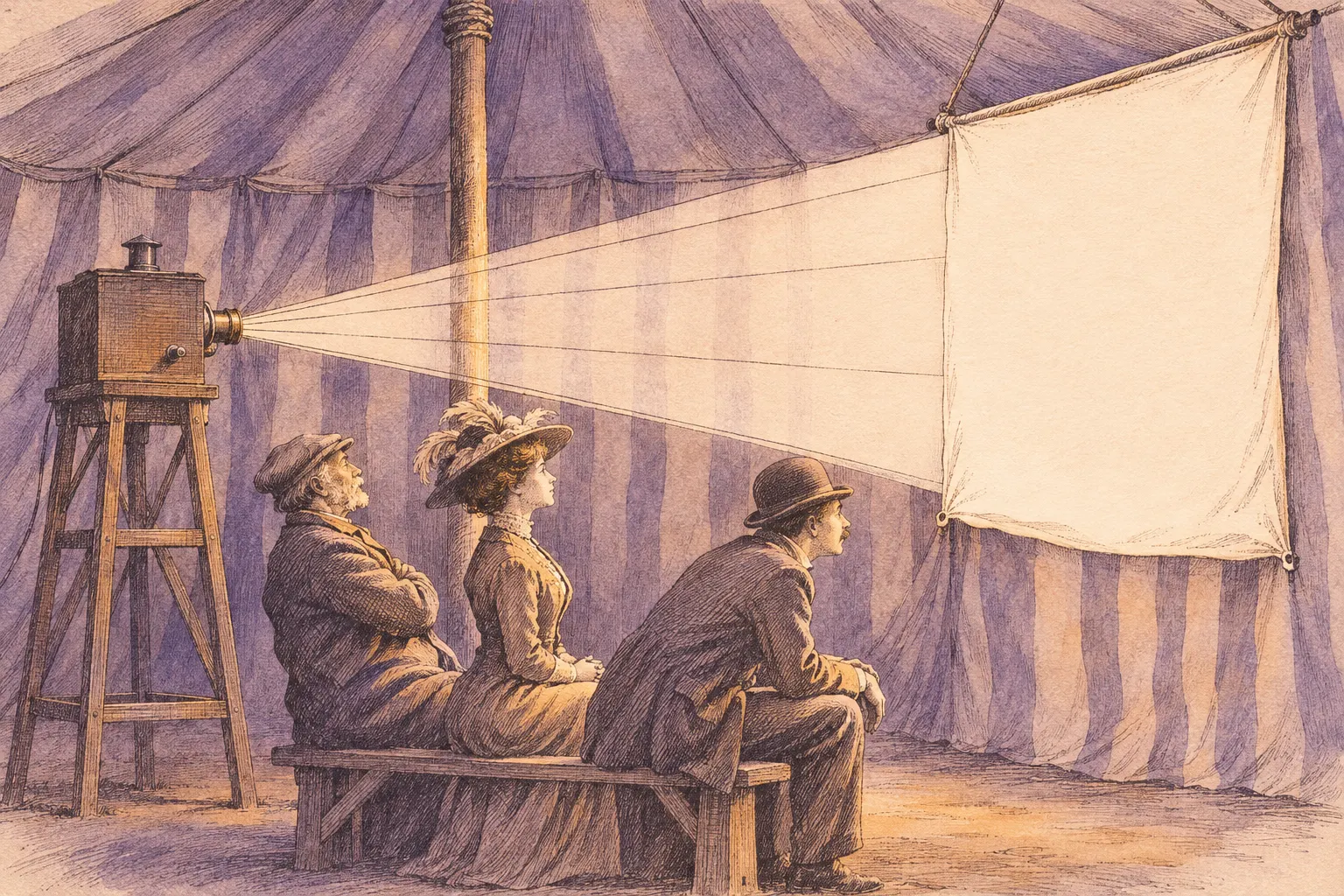
A Trip to the Moon: Méliès’s 1903 Catalog Lists 30 Scenes
Per the Star Films catalog dated 1903, A Trip to the Moon ran about 845 feet in 30 listed scenes for $130. Scene 9 reads “Landed Right in the Eye!!!”
Picture credit
Illustration: Flickers & Tintypes. Generated schematic image — not a photograph, film frame or historical record. No copyright is claimed in this generated imagery; you may reuse it, and a credit to Flickers & Tintypes is appreciated.
Early Cinema
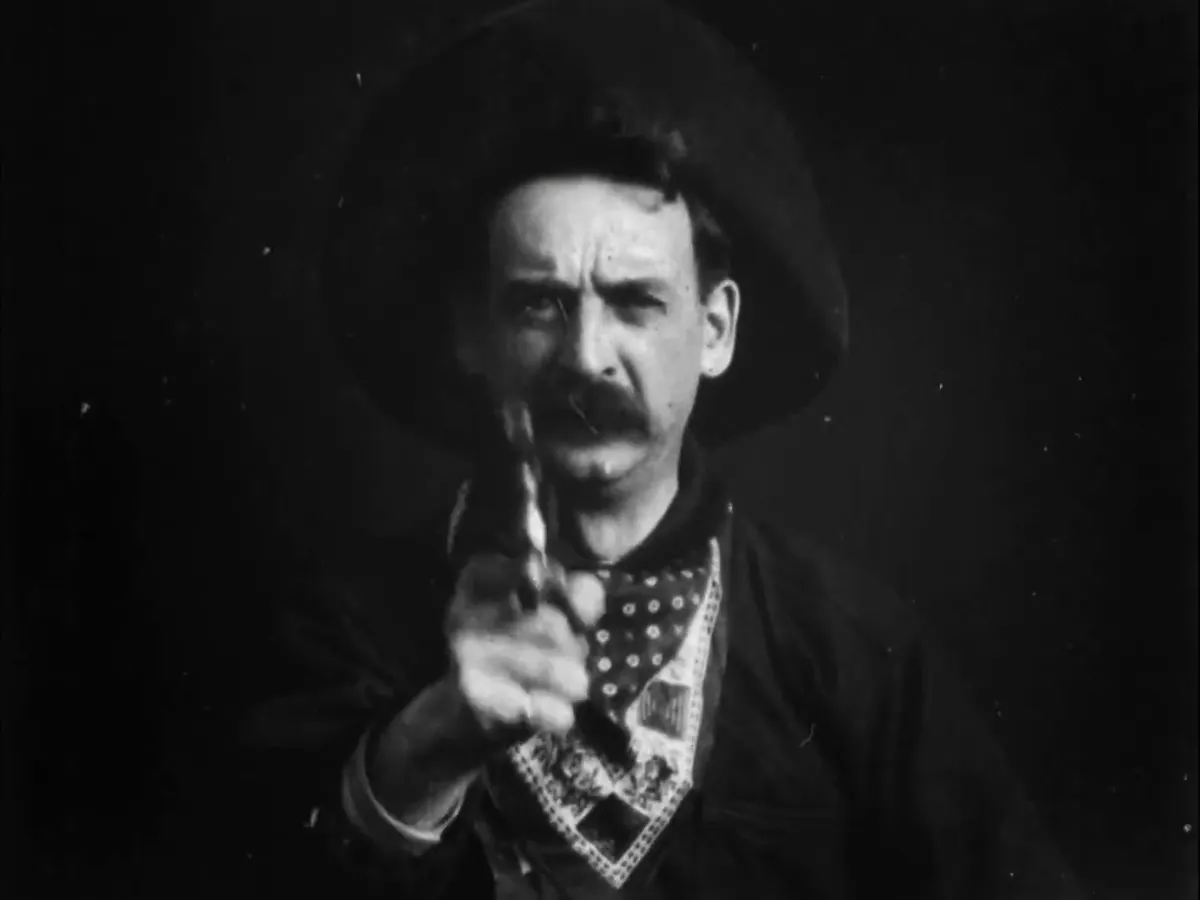
The Great Train Robbery (1903): Edison’s Movable Close-Up
Edison’s 1903 catalog let the operator put the bandit’s close-up at the start or the end. One public-domain copy, walked scene by scene with timecodes.
Picture credit
"Frame at 13:14.5 of this copy, from The Great Train Robbery (1903)" by Edison Manufacturing Company — https://commons.wikimedia.org/wiki/File:The_Great_Train_Robbery_(1903).webm — Public domain: Public domain in the US (published 1903; Edison catalog of 1903 marked Copyright 1903) and in the EU (director Edwin S. Porter died 1941, per the Commons creator record; no later-dying author identified); copy: Library of Congress 00694220, record not consulted directly; WebM conversion by the Commons uploader; modified: single frame extracted and scaled to 1200 px wide
 Illustration
Early Cinema
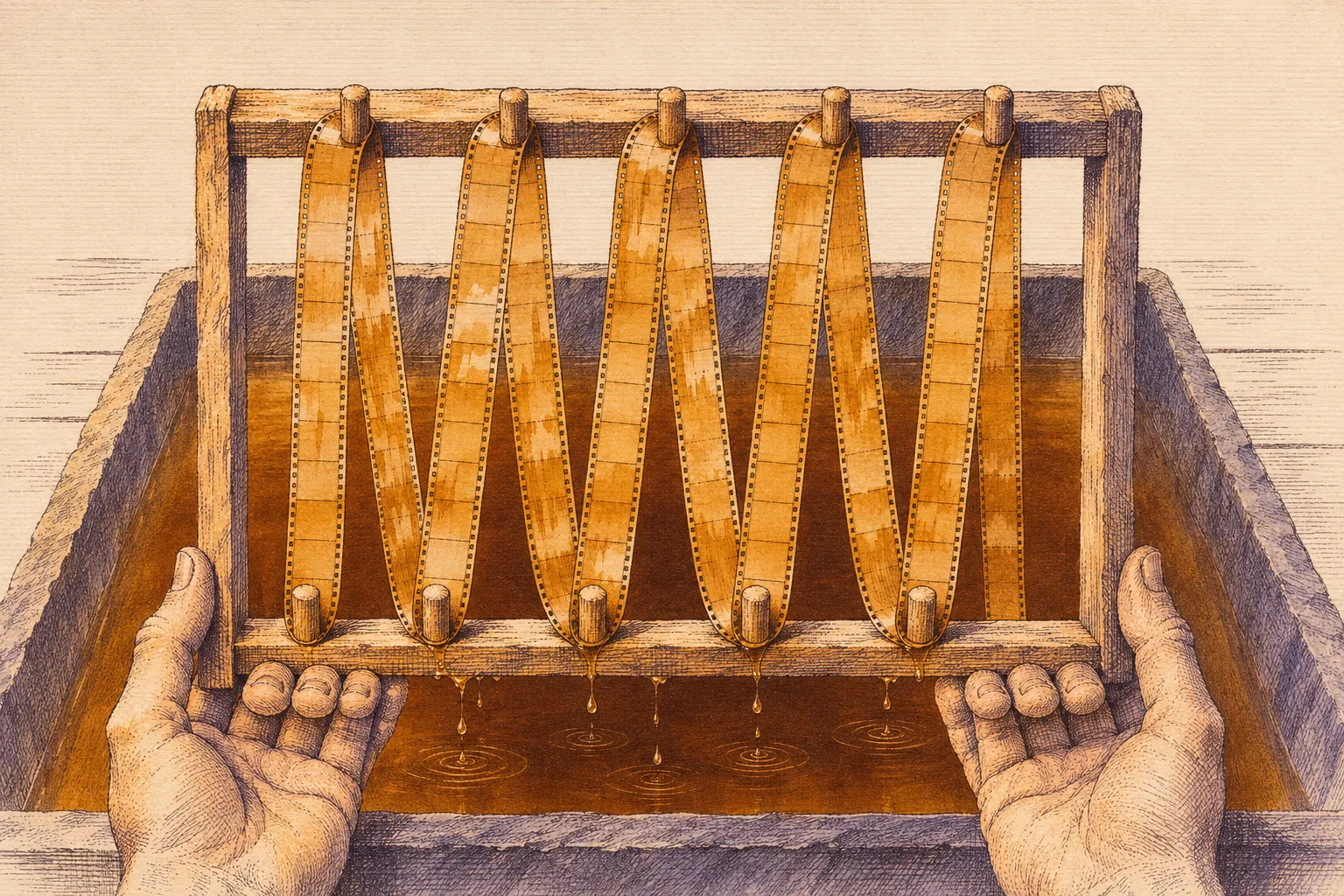
Tinting and Toning: A Tone Alone Leaves the Highlights Clear
Tinting vs toning, per Kodak’s 1918 handbook: a tint dyes the whole frame, highlights too; a tone colors only the silver image, so the highlights stay clear.
Picture credit
Illustration: Flickers & Tintypes. Generated schematic image — not a photograph, film frame or historical record. No copyright is claimed in this generated imagery; you may reuse it, and a credit to Flickers & Tintypes is appreciated.
Early Cinema
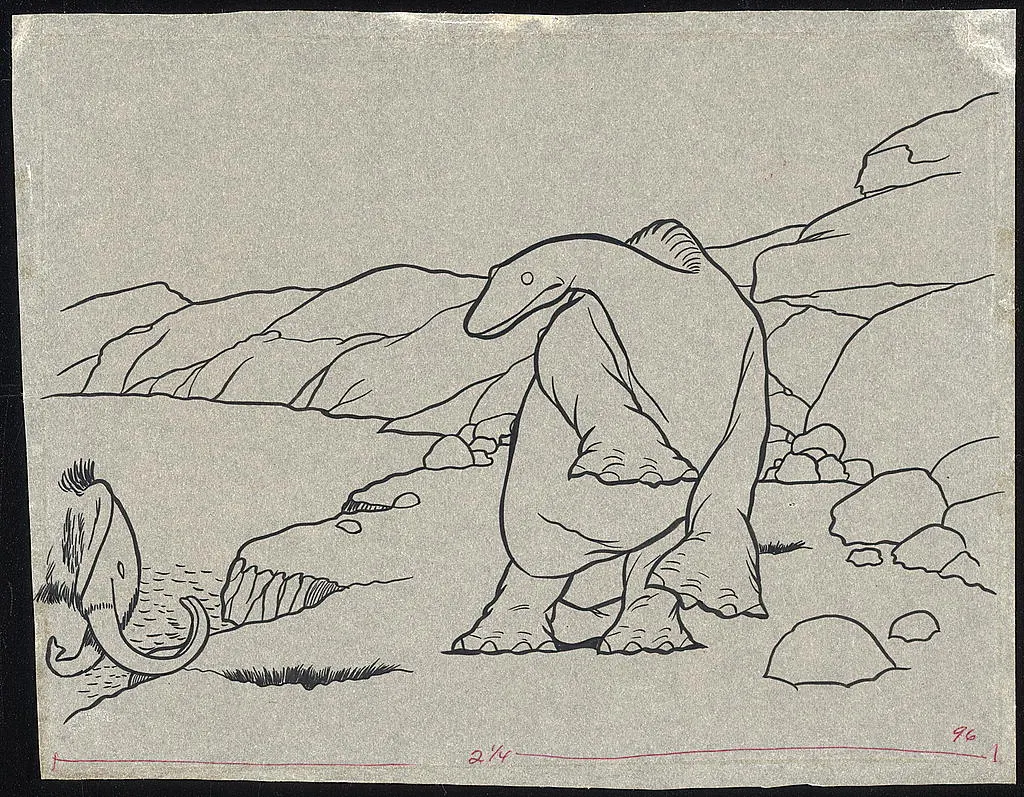
Gertie the Dinosaur: A 1914 Trade Notice Says ‘Dinosaurus’
Per Moving Picture World of November 14, 1914, Winsor McCay’s hand-drawn Gertie was to be marketed as “the Dinosaurus” and reportedly got $350 for a week.
Picture credit
"Gertie the dinosaur standing on a cliff edge looking at a mastodon (Library of Congress LCCN 2002706759)" by Winsor McCay — https://commons.wikimedia.org/wiki/File:Gertie_the_dinosaur_standing_on_a_cliff_edge_looking_at_a_mastodon_LCCN2002706759.jpg — Public domain: Public domain in the US and in the EU (Winsor McCay died in 1934, per the Commons category data; life plus 70 years ended in 2004, which covers the drawing whether or not it counts as published); the Commons file page marks it public domain (Library of Congress record not consulted directly)